4/05/2021

A spring day in Philadelphia, April 2021

Originally posted to Twitter

Sparrow incoming! #Philly #urbanbirding #sparrow

A small house sparrow with wings tucked fully in is shown in midair en route to a feeder hanging from a pole. Another small bird is on the other side of the feeder.
Daffodils in our backyard, not far from the feeder. (It's a small yard, so it couldn't be far in any case!) #Philly #spring #urbangarden
A row of daffodils, many in bloom, recedes into the background, where there are houses. There are strips of grass and dirt on either side of the daffodils.
A single precious bloom at Friends Center today. I liked a photo of a previous year's version of this flower so while I got a jigsaw puzzle made of it. #Philly #CenterCity #spring #urbangarden
A purplish-blue cluster of blossoms, shading to white, is in the foreground amid greenery. In the medium ground is brownery, partly a heuchera plant. In the background are brick walls, metal railings, and the windows and shutters of Race Street Quaker Meetinghouse.
Thanks to @robinmsf (currently on sabbatical and off Twitter, but occasionally still blogging), our family made Easter cookies--like Christmas sugar cookies but in shapes like baskets & rabbits. Here are 2 of my sillier ones, set on the last remaining plate from the everday dishes of my childhood home.
Two cookies sit on a white plate with a blue and green floral border. The left cookie is a deranged rabbit head with yellow fur. The right cookie is a pink Easter basket with white eggs outlined in blue.
Note: I enjoyed writing the image descriptions. If I get ambitious, maybe I'll post them to the main text of the blog.

1/23/2021

Quaker Bible Study at Philadelphia Yearly Meeting's 2020 annual sessions

Last summer I led two online Quaker Bible studies during Philadelphia Yearly Meeting's annual sessions in summer 2020. It was PhYM's 340th annual sessions, and their first-ever conducted entirely online.

Earlier in the week, civil rights leader and US Representative John Lewis had died, and his memorial services were held as PhYM sessions were starting. I remembered a clip of Rep. Lewis giving words of encouragement to a young man who asked him to record a message for his sister:

For the first session, on 7/31/2020, I embedded the video in my slide deck, and found biblical passages that resonated strongly with many of the phrases he used. In the context of that week, and the presence in mind of Rep. Lewis's legacy, it was a very powerful time together.

Here's the slide presentation from that session.

For the second day, on 8/1/2020, I looked at some passages from Psalms and explored how they may resonate for us today. Here's that slide show.

To be honest, it did not feel nearly as focused as the first session.

Here's an interview that PhYM staff did with me by email afterwards.

Truly, it was a privilege to be able to lead Bible study with Philadelphia Friends. This library of ancient texts from very different cultures and societies can still speak to us today, if we enter into that Spirit that still inhabits those texts.

1/21/2021

I was a DJ. Was I what I played?

I once was a DJ for my favorite radio station, WPRB in Princeton, N.J. 

Community-supported independent radio!

Stereo 103.3 FM!

There's even a photo of me from 1985 or 1986 that's used as one of the rotating background photos for the header on the station's website, wprb.com.
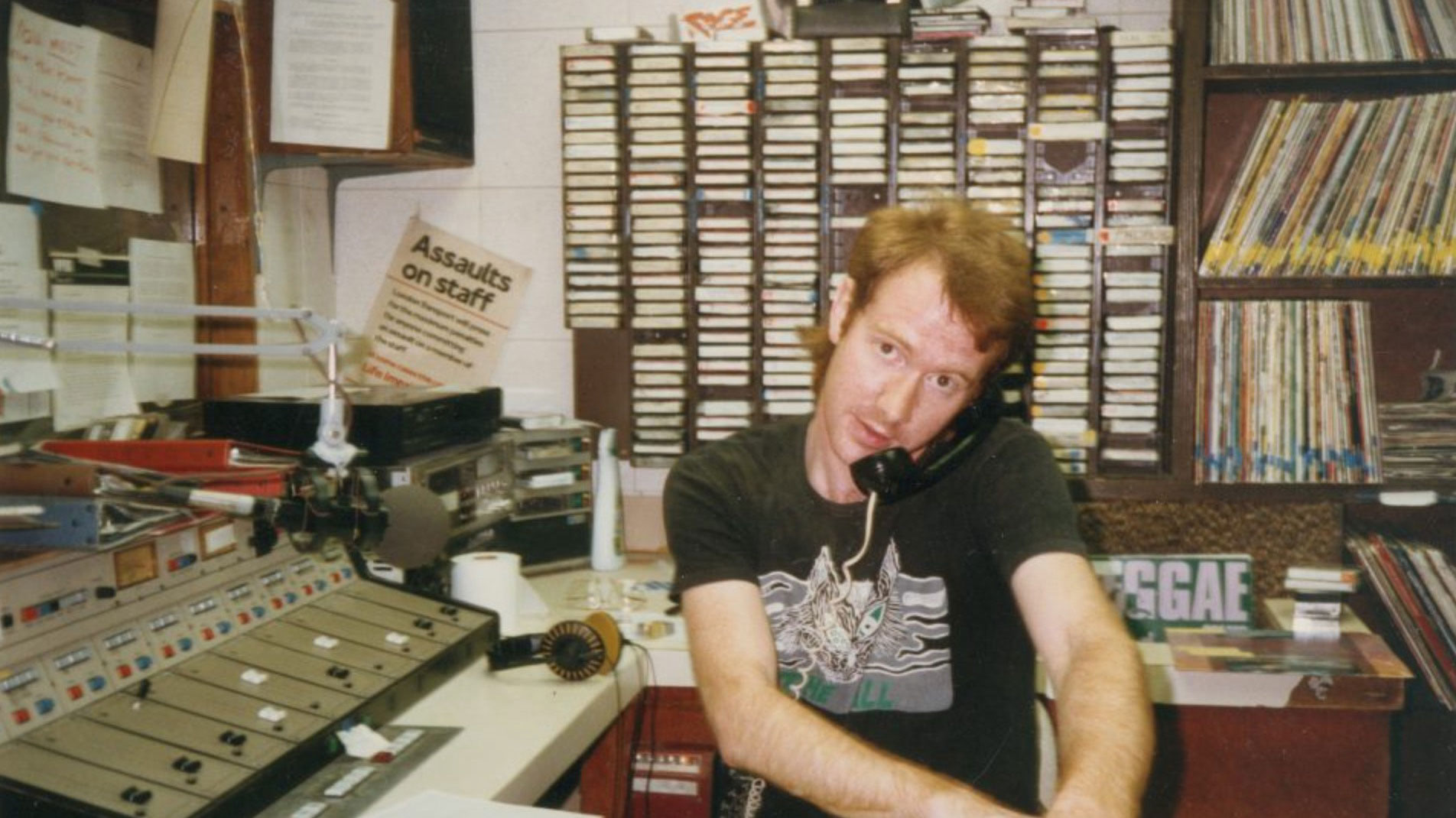

Recently I had the opportunity to peek at the studios. They are located in a different basement from where they were when I was a lad, but they are nonetheless still em-basemented.

Thank you to the generations of WPRB-ers who have made it what it is, and opened the door to new musical and artistic perspectives.

Community-supported independent radio!

Stereo 103.3 FM!

1/20/2021

Twilight

Recently I walked through Clifford Park in the Blue Bell neighborhood of Philadelphia at twilight, with the sky's tones shading from the last wisps of sunset to the inky depths of pending night. My phone captured it nicely.

A photo of distant trees, a house, and streetlights, with the darkening evening sky above.


1/19/2021

Castle

I lived in a castle, more or less, from fall 1984 to spring 1985. I did not live in the tower, but off to the left side of the building in this photo.

1/18/2021

Auspices

Personally, whenever I see a raptor, I take that as a good omen. On Jan. 11, a juvenile Cooper’s hawk paused with its lunch on the wall by the front entrance to Friends Center. So I’ve decided to take this as an auspicious sign for the year ahead! (Fun fact: One definition of “auspices” is “observation by an augur especially of the flight and feeding of birds to discover omens,” according to Merriam-Webster.)

A juvenile Cooper's hawk spreads its wings to cover its prey, while perched on a brick wall with a railing behind it.
Same hawk, different angle.


11/05/2019

When an oak leaf is enough

Recently Martin Kelley wrote on the Quaker Ranter, "Apparently it’s that time of year again. The days grow shorter, the nights grow chillier, and we bemoan the death of blogging." 

And Wess Daniels wrote on Gathering in Light posted, "Recently, I came across my old blogroll (a set of links of blogs you followed, supported, wanted to give props to), and 8 out of 10 of the links were dead."

It got me to thinking about this blog. I hardly post even once a year here any more. Yet I also don't post as much to social media as I used to. For a while I was putting my artsy photos on Flickr, but now there is a limit to how many images you can upload for free, besides all the business issues they've had.

So it occurred to me I could just post stuff here again. It doesn't have to be weighty thoughts on Quakerism or theology or the like. It could just be a photo of 
a brown oak leaf -- 
rain droplets on its surface --
against the backdrop 
of red brick pavers, with moss in between.
And that would be weighty enough.


Brown oak leaf with rain droplets lying atop red brick pavers

1/16/2018

Victoria Greene’s presentation on EMIR Healing Center, 1/14/2018

About a dozen people came to the Green Street Friends Meetinghouse on 1/14/2018 to hear Victoria Greene talk about her work with the EMIR Healing Center.

She founded the organization in memory of her son, Emir, who was murdered on March 26, 1997. EMIR stands for “Every Murder Is Real.” They provide support and counseling to families of murder victims in Philadelphia and even beyond.

The Problem
There were 317 homicides in Philadelphia in 2017, the first time since 2012 that the number has been over 300. Many of the murder victims are young black men. Police Commissioner Richard Ross said the increase is because of opioids, and the fact that the Police Department is down by 400 officers. There should be another 300 new officers by fall 2018 when the next class graduates from the academy. There are also gangs in many areas of Philadelphia.

Support Groups
EMIR Healing Center runs support groups for families of murder victims. Friends from Green Street Meeting provide meals so that the families can eat together from 6 to 6:30 pm. The meals enable people to get there without having to worry about eating first. Having a meal together helps people socialize and bond, which is a very important step in the healing process. There are about 25 people per group. Over the course of a year, Green Street Friends are providing something like 700 meals a year!

Friends from Green Street who want to help can sign up to cook a meal, bring takeout food, or just donate money toward buying food for the evening. If you do cook, please don’t use pork or nuts.

The process starts when, each week, EMIR gets a fax from the Police Department with the list of homicides from the past week and contact information for the next of kin. EMIR follows up with a letter and later a phone call to invite them to participate in the support groups. Some people are referred by other individuals or organizations in the community.

In the groups, EMIR teaches families about trauma: how to recognize it; and how to cope with it in healthy ways. Frequently people who do not recognize trauma end up coping in unhealthy ways. People can come back again, too. Often the second year is hardest for people – the second Christmas or birthday – when they realize it’s real, the person is never coming back.

The first two meetings of the groups are open to drop-ins, but after that, no drop-ins are allowed. The group needs a chance to bond together, and that rule helps them do that. Each time there are separate groups for women, men, and teens and kids.

Intervening to Prevent More Violence
EMIR has sometimes gone to individuals to prevent them from retaliating with violence after a murder. Recently a family asked them to intervene in a gang dispute in South Philly. They are looking at being mediators.

At one point EMIR was part of a collaborative that applied for grant funding. It would have included money to pay “interruptors” who are already on street corners doing this work, for no pay. It did not work out for EMIR in the end. There is a still a serious need for interruptors.

Public Policy
EMIR also has growing interest in public policy. First, the Victims of Crime Act (VOCA) the Victims Compensation Fund. The source of money for this fund is fines paid by convicted criminals, not taxes. However, the VOCA law excludes families of people accused of “causing their own demise.” If a police report says the victim was committing a crime when killed, then the family cannot get money from the fund. There is no process for judging whether or not the police report is correct; and even if it were, why should the families of the victim suffer?

EMIR has worked with attorney Angus Love on some cases. In one of them, a father was upset that his son was accused of dealing drugs, when he didn’t, and there was no evidence he did. They were able to get the office in Harrisburg to overturn the initial decision. There may be a lawsuit in the courts or a change in the law in the legislature.

In September, EMIR held a forum on gun violence. Families of victims had the chance to be heard by public officials, including Congressperson Dwight Evans, Commissioner Ross, several City Council members, and some state legislators. EMIR has formed committees around illegal guns, education, and housing.

Families who get involved with activism often find some healing. It’s therapeutic because they may find some help for other people and also work for the common good. This can especially be helpful when the perpetrator of the murder isn’t caught. Less than half of murder cases in Philadelphia are getting solved now, so there is a lack of closure for many families.

Victoria’s Spiritual Journey
Finally, Victoria spoke about her spiritual journey through this work. Soon after she started EMIR, she organized conferences two years apart. She had no experience doing this. Yet when she asked, people said yes. And both were successful. She felt God was guiding her.

People ask Victoria how she can cope with the stories, so similar to what she went through with her son, Emir.  She said, “When I hear a family’s story, I am with them. I’m holding their hands, listening to them. That’s God.”

She sees how fragile life is. When she felt suicidal after Emir’s death, she heard his voice saying to her, “What? It’s bad enough I got killed, now you’re going to go?” And she held on. Now she won’t hold grudges. If someone is good, she’ll tell them. She added, “Because you never know if you’ll see them again. Be authentic. Don’t take people for granted.”

That’s why Quakerism attracted her. She heard about Spirit-led activism. She had never heard that anywhere before finding Quakers. Her experience is definitely of Spirit-led activism.

WAYS TO GET INVOLVED WITH EMIR HEALING CENTER:
·         Join Green Street’s brand-new Quaker Social Change Ministry group! We hope to have our first meeting to get organized on Feb. 19 (this is still TENTATIVE).
·         Work with EMIR on amending VOCA
·         Join one of the committees formed after the September forum (education; stopping illegal guns; or housing)
·         Volunteer to help with the annual fundraising concert, usually late in the year
·         Donate! If you do, you’ll multiply the impact of our meeting’s annual gift to EMIR
·         Watch Victoria’s QuakerSpeak video and share it with people you know: http://quakerspeak.com/every-murder-real/


5/16/2016

Faith to Move Mountains

Last fall I was blessed to co-lead the Inquirers' Weekend at Pendle Hill with Emma Lapsansky.

We had a deeply engaged group of eight people on varying places in relation to Quakerism. One had attended four meetings for worship; one is an Episcopalian minister with ancestors who were Quaker, and so she wanted to better learn Quaker vocabulary and practice; one had been a member 30 years ago and eventually resigned, and now is considering joining a meeting again; and many of the others are regular attenders at meeting for worship and are considering next steps.

I had never facilitated a full weekend workshop before, though many afternoon or evening ones, plus many a Sunday morning class with children. And I've clerked 12 weekend-long Friends Journal board meetings in total over the last four years; those are somewhat similar, logistically anyway.

Anyway, it went very well. Emma was a fantastic co-leader, with her probing questions and knowledgeable answers in turn--the very model of a well-loved professor. I brought some different activities to mix it up a bit and make sure we took stretch breaks. We watched a couple of QuakerSpeak videos that spoke to the group's condition.

Afterwards, I reflected that this had been something of a "mountaintop" experience for me, but it wasn't a tiptop peak experience, either. I've had them before. I hope to have them again. The fact that I drove home every night to be with our sons while my wife was also away meant I didn't engage 24 hours a day, and that may have had an impact.

But the mountain didn't feel as high as when I was newer to Quakerism.

In considering that, I realized, that's partly because I am further up "the mountain" of spiritual experience in my daily life. I fall far short of Paul's injunction in Thessalonians to "pray without ceasing," yet I often remember to. And I've been practicing as a Quaker for 25 years now. It makes a difference.

It occurred to me that when Jesus spoke of having sufficient faith to move mountains, maybe it wasn't as literal as the words recorded in the Bible, at least as translated into English:

Truly I tell you, if you have faith as small as a mustard seed, you can say to this mountain, ‘Move from here to there,’ and it will move. Nothing will be impossible for you.”
- Matthew 17:20, New International Version

Perhaps this passage gives us a clue that we can move the mountaintop to us. We can have a daily spiritual practice that brings us closer to God, closer to the feeling we get on retreat at the top of a mountain, a peak experience literally and spiritually. I can't believe in prayer literally moving mountains, at least not with what I understand of how the universe works. I can totally see how we can move the spiritual mountain to us - and ourselves up it - so that we are there all the time.

During the weekend, Emma had reminded us the early Quakers believed humans can attain a place, as she said, "above Adam, and beyond falling." I felt we touched a little bit of that place in our weekend together.

Written November 2015, posted May 2016.

Just Step S'ways

I've been reading The Long Utopia, the latest and presumably last book in the Long Earth series by Stephen Baxter and the late Terry Pratchett.

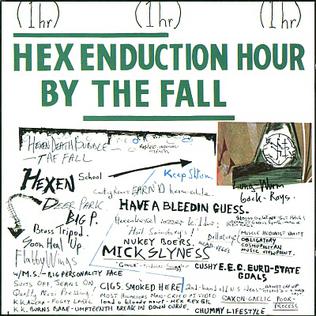
It occurred to me that the Fall's "Just Step S'ways" from Hex Enduction Hour is the perfect soundtrack because of the lyrical parallel to the central conceit of the series.

The original album version of the song is here.

Click on the image for the Wikipedia entry on the album.
11/10/2015

Three perspectives on the Friends peace testimony

1. Quakers are a religious society with a stance against participating in war
Quakers are a faith community. They have a collective position that participating in warfare is wrong and against the teachings of Christ Jesus. This is a clear and longstanding corporate witness growing out of Quakers' understanding of Christianity.

2. Individuals must still make their own choices
Even when the teachings are clear, each individual has to decide for himself or herself what is right action in a particular context.

Even though Quakers opposed all war, many individual men signed up for the US Civil War. Many of these volunteers were read out of meeting; and a goodly portion of them were accepted back into fellowship afterwards, especially if they expressed contrition. Even if the official witness of Friends was against the war, Friends supported an end to enslavement, and as a result many could understand why an individual might choose to sign up, even if it was officially outside the Quaker testimony.

Later, many young Quaker men even signed up for World War I, to the consternation of many elders, including Rufus Jones. The American Friends Service Committee was founded in 1917 in part to provide young Quaker men with meaningful service opportunities outside fighting in the military. One option was the Friends Ambulance Corps.

3. An individual may find a different answer than society at large, and need not have all the answers for everyone
Today, most people think of Quakers as not just refraining from serving in the military themselves, but also as people who act to stop war before it begins. This is a relatively modern approach.

Many Quakers involved in peace work have analyzed past wars, diplomacy, and popular movements to understand strategies and tactics to prevent war in the future. There are too many examples to name here, so I'll list just one information resource: Quaker George Lakey led the creation of Swarthmore College's Global Nonviolent Action Database, where you can learn more about popular nonviolent movements. (Side note: And there can be practical benefits to a peaceful approach: According to Waging Nonviolence, in researchers Erica Chenoweth and Maria Stephan found that nonviolent struggles were successful significantly more often (56%) than violent ones (26%). See their book Why Civil Resistance Works.)

In some cases, Quakers have identified the failure by "good actors" to act in a timely way to prevent demagogues and dictators from rising to power. Once those moments are past and it's "too late," war may seem inevitable in hindsight. For example, theologian Walter Wink faulted the churches in Germany for not speaking out against Hitler and the Nazi putschists in the early 1930s. For another, peace activist David Hartsough and five colleagues were arrested in Kosovo in 1998 while there to support the mass student nonviolent movement against the Serbian dictatorship. Despite the pleas of the students, Hartsough, and others, the nonviolent resistance was not supported by other Western nations and so was crushed, leading to genocide, internecine warfare, and US and NATO bombardments when it was "too late" to support the movement.

So one may intellectually concede that wars of international aggression appear to have no solution besides war -- when they reach that point. They are not inevitable, however, if people of good will and conscience resist before that point.

Finally, even when one or more nations begin warfare, people of good will and conscience have a choice. They can refuse to participate, no matter how just the cause may appear, or seem to appear, in order not to damage their own spiritual well-being. Such a person can know in her or his heart that this is the right action for him or her. Even when the larger societal answer seems to point to war as the answer, the still small voice can still tell that individual, "War is not the answer." And if everyone lived that way and followed that voice, the world would be a different and better place.

5/28/2015

WPRB-FM's 75th anniversary website

I'm ridiculously happy to have been chosen as the photographic subject for the Facebook page announcement that WPRB-Stereo 103.3 FM has launched www.wprbhistory.org in this, its 75th anniversary year.


WPRB means a lot to me. It particularly meant a lot to me from fall 1980 to fall 1989, when I either listened to the station pretty much every day or got to be a DJ on it.

A WPRB-themed exhibit will open at Princeton University's Mudd Library this fall.

We're thrilled to introduce a new WPRB History website for DJs, listeners, and college radio historians! Click through...

Posted by WPRB 103.3 FM on Thursday, May 28, 2015


In the words of then-Fall guitarist Craig Scanlon, in a station ID for WPRB in the early 1980s, "Enjoy!"

4/30/2015

GFox quotable quote

From the Journal of George Fox, pg. 96:

"So dear Friends live all in the peaceable Truth and in the love of it, serving the Lord in newness of life, for glorious things and precious truths have been manifested among you plentifully, and unto you the riches of the kingdom have been handed."

5/19/2014

Notes from the 2014 Cary Lecture by William Graustein

I attended the 2014 Stephen Cary Lecture at Pendle Hill, the Quaker retreat center in Wallingford, Penna., in April. The following are my notes, pretty much unedited.

A sound recording of the lecture is here.

Bill Graustein – Stephen Cary Lecture, 4/7/2014

“Prophets and Nonprofits: Tending Quaker Roots in Secular Soil”

How do scriptural referents (parables, prophets) appear in the inward experience of the Light?

He went to a high-church Episcopal boarding school; there was some tension around religion with one of his parents. After he graduated he was struck upon meeting a Quaker, who talked easily and simply of her faith. She invited him to meeting for worship in Purchase, NY. When they all shook hands at the close of meeting, he felt very welcomed. Later, he reflected that this was indeed a radical sign of welcome.

Parable of the sower: had heard it back in school, but it came alive for him one time stopping by a farm field one winter evening in December. He realized sowing seeds then would not result in anything; but sowing them in the same location four months later would. So he saw the parable could be about time as well as physical (or spiritual) location.

His father had founded a company back in the late 1940s. Although it didn’t do well, he started a foundation, too, (later?) named after his late brother, Bill’s uncle. The company was sold much later, for about four times what they thought it would, so they had a lot of money. Holy sh**! He was in the 1%.

They agreed to start a family foundation with his mother’s share. Bill consulted people for guidance. As a geophysicist, he expected data and analysis. Instead, he heard stories and narratives. Meanwhile, his mother’s withdrawn stance was diagnosed as paranoia.

His father, son of an uneducated dairyman, had gone to Harvard, class of 1902. He was friends with Amos Wilson, (one of?) the only African American at Harvard then. He stayed friends with Amos throughout his life, as they found a pile of correspondence from Amos in his dad’s papers. Bill realized racial justice was important to his father [and so could be appropriate for the foundation’s work].

Bill attended a retreat on “emerging ministries” that he heard about at a ministry and worship committee meeting.  He didn’t feel emerging or like a minister, but went anyway. Found that people there had the same story in different forms: many had suffered some hurt, faced facts, chose life, got moving, and now wanted to figure out how to give back.

He organize a planning meeting with 20 people in New Haven. What’s your vision for the future, and what’s getting in your way? He found two major themes:

  1. Yearning to look outside the bounds of their own organizations to work together for something greater;
  2. Seeking support to be more fully alive in community. The work wasn’t necessarily supportive.
He realized he was hearing things that Friends address, for example, listening non-judgmentally.

He founded an organization called the Community Leadership Program. It encouraged storytelling. Then he introduced the clearness process to them. After the first year, they did an evaluation. They learned people of color held back on issues of race, because the two initial leaders were both white. In the second year they brought in a third facilitator who is a woman of color. This helped.

Bill also brought in Donald Davis, who uses the power of storytelling.

Niyonu Spann is now working with him to help transfer the skills and talents of holding space, consciously creating. They have founded an organizaton on co-creation; she is doing most of the day to day work.

He felt his work was difficult, yet there was vitality in failing, and it was rewarding work. The work pulled him away from his meeting, though.

He told the story of a 57-year-old woman on Metro North, who was told not to sit down next to a white man because he didn’t want her black skin touching him. She was shocked, paralyzed, and troubled that no one else spoke up. There was only one other person of color in the car at the time.  Bill was in meeting for worship two days later and thought, “The composition in this room looks like that Metro North car.”

He told the story of a man from a low-income background whose father had left the family. Once he was on a commuter train, where he saw an African American man in a suit and tie and sharp as can be. He resolved to be like this older man. Now he has founded a couple of nonprofits in New Haven to help young men in circumstances he had grown up in. He chanced to meet his father once, in Florida; but he suffered from mental illness, and could not truly see his son. Yet this was hard, as his whole life the younger man had tried to be a man his father could be proud of. Bill could relate because his own mother could not really see him, either.

Quoted Cornel West’s take on Ephesians: “love the people.” Most radical thing Bill ever did was listen.

People in the world outside Quakers are longing to be heard, to be affirmed. Quakers have something to offer. Many Quakers want to “get outside the Quaker bubble,” as the December issue of Friends Journal said.

Renewal : Power flows from the practice of Friends for him. What do we have to offer the world as patterns and examples?

He concluded, “To listen to our neighbors as if they were prophets is a necessary step toward justice.”


Q&A.

Q (J): Sometimes white people want people of color to tell their stories at meetings. But that often doesn’t work well.
A: Yes, there’s an imbalance of power/privilege. Start with questions that are not about issues: “Who’s someone you admire who you wish the others here could know?” (Otherwise it puts the less-privileged person at risk.)

Q: What’s a success and a failure you’ve had?
A: CLP is resulting in collaborations because people see commonality. Personal friendships are growing across difference. Mistake was not getting on the ball sooner. We often make mistakes in CLP and then say, “Oh, okay, what can we learn?” And the biggest mistakes are the ones I haven’t learned anything from yet.

Q (LD): I’m part of a small group of white people who meet to talk about racism. It’s a spiritual practice. One person said, “I used to be able to forget about racism. Now, not a single day goes by when I don’t think about it.” This is important work you’re doing. Can you do this work with national Quaker organizations?
A: (bows = yes) Q (O): Gravest sin is not to recognize the divine in others. My prayer is that we acknowledge the brokenheartedness in not seeing one another.
A: We all need refuge at times. And other times we nee to step out of refuge and into action.

Q (V): RSOF is either at a breaking point or a breakthrough point. How might we step into and through the difficult bits?
A: 1) Boundary between RSOF and outside is more permeable today. Revitalization can come from without as well as within. Patterns of exclusion can be worked on. 2) How do we get people the “psychic Wheaties” to enable them to do the hard work? Sometimes, we nee to ask for help—from elders, accountability partners. Celebrate small steps.

Q (S): Say more about the distance with your monthly meeting.
A: I did not feel the meeting was letting me down, more that I was busy, stuck in “facilitators mind” when at meeting for worship, and didn’t know how to invite people along with me. Feel closer to my meeting again, serving on a committee again.

Q: Point is to go forth, not to build meetings. Beatitudes turn everything upside down.
Q (A): I affirm that you choose to do this work. You could choose not to and still have a foundation and have people around you say you’re doing good work. This, this is important work. [Didn’t write much in the way of notes, because I responded to her emotion with my own deep emotion welling up. Definitely felt like a moment of Presence.]… Is there anything that you get angry about in this work? A: I don’t do anger well, but I’m kind of starting to get worked up: Why aren’t more of us doing this work in our culture? There, did I do better [in expressing anger]? [Niyonu shakes head, everyone says “No!” and we all burst out laughing together. Together!!]

8/20/2013

Approaches to having children in Quaker meeting for worship

[NOTE: I wrote this as a comment on Wess Daniel's post, "Thoughts on Bringing Children to Meeting for Worship."

[His article in turn also refers to Kathleen Karhnak-Glasby's excellent article in Friends Journal, "Bringing Children to Worship: Trusting God to Take Over from There."]

Green Street Monthly Meeting, our liberal unprogrammed Friends meeting in Philadelphia, is looking at how to better integrate the children with the rest of the meeting -- though I doubt we're ready to ditch Firstday School.

A commenter on Wess's post decried the practice in some unprogrammed meetings of having an occasional "all-ages" meeting that is poorly conceived, and a "poor hash." I can certainly imagine being in an otherwise-unprogrammed meeting that did a semi-programmed one poorly. However, I wanted to share some of my recent experience of the last two years.

Green Street has the children in Firstday School for the first 45 minutes (in two groups, elementary and middle school aged), and to worship the last 15 minutes. The teens generally come to meeting for worship.

On the 5th Sundays, a few times a year, we have a mostly programmed meeting for worship. It's definitely a hash, and a tasty one at that!

The one or two I've attended were led by a Friend who grew up expecting to be a minister in another tradition, so has some ability to lead worship; and more important, who is now a high school teacher, with a real gift for drawing young people at many different ages.

One 5th Sunday I missed featured my older son singing a Green Day song ("21 Guns") with his peers playing electric guitar. Since he has never sung with those peers before or since, I'm sorry I missed it. (And it's not like we're about to organize a worship band or something; I have personally never seen anything more high-powered than an acoustic guitar or a violin, usually around the year-end holidays, at this meeting myself.)

The warmth of the greetings at rise of meeting and expressions of joy following these semi-programmed meetings are enough to reassure me that we are saying something quite positive about our worshiping community. To me, it needn't imply anything negative about expectant waiting worship the other 48 Sundays a year.

7/31/2013

Summer living in the city

I appreciate living in a large city again. For the four years before we left the SF Bay Area, we lived in a small city to the south of San Francisco. While technically it was in the suburbs, it was definitely pretty urbanized, but in a fairly unsatisfying way, and so I missed "real" city life.

Now I work in Center City Philadelphia, which I enjoy; I still miss downtown San Francisco sometimes.
This afternoon I'd been meeting with my boss when the fire alarm in our office went off. It was the most bureaucratic recorded emergency instructions I'd ever heard: "Leave the building! Cease operations! Do not utilize the elevator!"

On the sidewalk, I saw several people I knew, as there are two Quaker organizations in the same building where I work. One Friend asked if we could plant-sit again, and I said yes. She said she'd come over tonight with them. I enjoyed seeing her and the other people I knew. And my boss and I continued our meeting on the "front porch" of the Convention Center across the street from our office. It was a great day to be outside.

At home, we live in a section of Philadelphia that is considered one of the oldest "streetcar suburbs" in the country, yet it's most definitely within the city limits. But the trees are tall and mature, and the pace is calmer here than in Center City.

Tonight Son #1 and I had dinner on the back porch, and it was neither cool nor warm, just pleasant. Then we went (by car, alas) to an ice cream parlor for dessert. We sat on the bench right outside the shop on Germantown Avenue, and watched the clouds turn pink and then many shades of gray.

This afternoon he had helped another Friend pack up her moving truck. I had gone by last night with some of our remaining boxes, and to help with packing, and heard that she needed help while I'd be at work today. We moved twice in the last two years, so we owe the universe some help-with-moving karma. I asked Son #1 if he'd be willing, and he said okay. And it was close enough for him to walk—there's that living in the city again.
Robin called shortly after we came home to say hello. She will be one of the keynote speakers at Baltimore Yearly Meeting, on Friday evening.

While we were talking, the Friend came over with her plants. Well, it just so happens that she is a member of Robin's support committee, so I put the phone on speaker so we could both talk to her. In fact, our Friend gave Robin some really good advice and some very kind words of reassurance. I felt enormously blessed to be part of a community in this way.

It's good to remember my blessings. It is practical and useful, as well as probably healthier, to be grateful and to focus on what's good and how to be helpful and loving in life, it seems to me.

5/31/2013

Ears whose drums you can scratch: WPRB-FM

I'm "going back" to Princeton for a day tomorrow, 6/1/2013. It's been 25 years since I graduated from the university there, and they have a big party for that kind of thing.

As I reflect on that time in my life, it's worth remembering why I went to college there in the first place: WPRB-FM.

Today, their slogan is simply, "Community-supported independent radio."

Back then, when I was in high school and then college, the slogan was even more simply, "Stereo 103.3."

Today they have a new studio in a new building, and I hope to drop in for the open house they're having. I will be pining for the basement of Holder Hall, a little bit. Not too much. Especially because if we turned up the speakers too loud, the students who lived on the first floor were liable to come down and lecture us. And it was pretty hot in the summer, with one window unit air conditioner stuck in the tech closet next to the studio, and pretty much venting into the rest of the station offices, making them often unbearable.

As the person who could well be the 25th or 26th successor to me as station manager says in this piece, "Playing music on WPRB is a way to reach out and commune with faces you may never hear, hands you may never feel, but hearts you have a few fleeting scrambling hours each week to try to touch. Ears whose drums you can scratch."

Thanks for scratching this Central Jerseyan's eardrums, 'PRB!
That's me cueing up a Brian Eno record
while taking a request at WPRB-FM,
probably in 1985 or 1986. The t-shirt
is from The Fall's tour in support of
their 1985 LP, "This Nation's Saving Grace."

4/27/2013

Guest Post: Quaker Food Pantry, by Christine Hoang

My friend Christine Hoang is a parent at San Francisco Friends School. She coordinates the school's participation with the San Francisco Friends Meeting's neighborhood food pantry, which is a local outpost for the San Francisco Food Bank. I was clerk of the meeting when we went through the discernment process to create the pantry, and I'm pleased that not only has the pantry expanded to serve more people, it has helped keep the relationship between the school and the meeting vibrant.

The following piece by Christine was originally published in the school's "Circle Back" newsletter and is reprinted with the author's permission.


Quaker Food Pantry
At the Meeting House

By Christine Hoang
SFFS Parent & Board Member


Saturday mornings, the Friends Meetinghouse on 9th Street begins its bustling day with deliveries from a wide variety of vendors. There’s the regular delivery from the San Francisco Food Bank, which drops off staples like pasta, bread, fresh fruits or vegetables from suppliers or farmers; deliveries from Food Runners which picks up fresh and prepared food items and pastries from specialty stores like Whole Foods; and a very special bread delivery from a volunteer named Al. Al spends his Saturdays gathering bread donations from Safeway and other stores and delivering his bounty to the Meetinghouse. Al’s bread delivery now accounts for over half of the bread distributed by the Pantry.

Three years, ago, when SFFS first began partnering with the Quaker Pantry, the Pantry served 60 – 70 people every Saturday; now, the Pantry serves well over 100. Clients are slotted into twenty-minute windows in which they can shop. Each client usually brings one or two bags to fill up with groceries for the week. For most clients, the Pantry is their only source of fresh fruits and vegetables, as well as staples like bread or pasta.

SFFS families contribute to the Pantry in vital ways. Several families contribute financially, a commitment that has allowed the Pantry to feed another 25-35 clients a week. A few parents are also trained to work as shoppers, going to the Food Bank to order the week’s delivery, and filling in when volunteers are short. Most families though, contribute time. For the past three years, each SFFS grade has adopted a month in which families are responsible for staffing the Pantry. The day starts around 10:00am, when the first deliveries arrive. Working alongside delivery drivers and Meetinghouse volunteers, SFFS families unload crates and boxes off of food trucks and create a real store! Vegetables and fruits are placed into large bins or buckets, cans are sorted, pastries and perishable items are arranged delicately on tables, and loaves of bread are stacked into towers.

Another wonderful aspect of the project is that kids work alongside adults.  As SFFS parent Tawni Sullivan has noticed, “Kids feel empowered by really owning their own jobs, not just helping the grown ups with theirs.” Younger kids blacken bar codes on donated bread, organize and stack cans, and count out the vegetables for clients. Older kids break down cardboard boxes and do the math necessary to ensure a fair allocation of food for everyone. 

Around noon, the Pantry opens its doors and the first clients filter in. Most of the clients are elderly; many are monolingual Cantonese speakers; several are homeless. The Quaker Food Pantry affords them regular access to healthy, fresh food. During the shopping hour, all volunteers work at distributing food, handing out three oranges a piece, two onions, or a can or two. For Jen Maeder, “working side by side with your classmates and their families on a weekend really cements the SFFS tenets of community and stewardship. Playdates and soccer games are a great way to socialize with the school community on the weekends but there is something different about once in awhile rolling up your sleeves and working alongside your classmate on a weekend. To me, it shows my kids that I take seriously what they are learning about community and stewardship in school. It’s not something I just expect of them, but I am choosing it for myself as well.”
This is my younger son at the food pantry in 2010,
when it was just starting out.

3/17/2013

Vital Quaker Tools (Kitchen Remix Version)

Today in leading the Firstday School for our middle school/early high school group, I brought a few props to help me make some points.

Among other things, I brought our sifter and our funnel.


When the lesson was over, it was time for the group to go to meeting for worship for the last 15 minutes. I gathered some of my things up, but left others, including the kitchen gear.

In meeting, I had a nudge to talk about the funnel and the sifter. I wanted to stand up and hold them up, for these simple, everyday tools to be visible, not just imagined. However, I had left them upstairs. So it seemed that this was not a message for that time and place.

We had meeting for business after lunch. It started with the Third Query for Philadelphia Yearly Meeting, on spiritual nurture, ministry, and religious education. Among the many queries of the Third Query: "How do we teach about Quaker practices in business and worship and their importance to the functioning of our Meeting community?"

By then I had my funnel and sifter with me again, and I felt clear to speak the message, more or less like this:
These tools are important for Quakers. As with a funnel, in meeting for worship we can take all of our thoughts, feelings, and experiences, and focus them toward the center, and drop them into the container of meeting.
As with a sifter, in meeting for business we sift through the flour and strain out any chaff or pebbles, and let the good stuff drop through to be used. [spin handle of sifter for emphasis]
The tools -- centering, discernment, or even meeting for worship or meeting for business themselves -- are not the point of Friends worship. However, in my experience, they are very helpful tools indeed along the way to learning to love God and to love my neighbor. It's important for adults as well as teens to be taught, or reminded, of this.

1/04/2013

Documentary and Discussion at Green Street Meeting: "Salt and Light: The 6th World Conference of Friends"


Chris and Robin Mohr will host the documentary "Salt and Light" on Saturday, January 12, 2013, at 6:30 pm, as a way of reporting back from the 6th World Conference of Friends that they attended in April 2012. They will also speak briefly about their experience in Kenya and about the Friends World Committee

The 42-minute documentary was created by filmmakers from Pacific Yearly Meeting

The film is appropriate for all ages, but probably of more interest to Friends over age 10. Child care and refreshments will be available. (It is unlikely we will have any ugali, but we'll try to make popcorn.) 

Green Street Friends Meeting is at 45 West Schoolhouse Lane, between Greene and Germantown Streets, Philadelphia, Penna.